Nutrition
At Pioneer Medical Group, we recognise the vital role that nutrition plays in preventing and treating illness, and we believe that one of the most powerful steps you can take for your health is choosing a diet rich in whole, plant-based foods.
You don’t need to become vegetarian or vegan to experience the benefits, simply increasing your intake of vegetables, fruits, pulses (beans and lentils), wholegrains, nuts, and seeds can help your body heal, reduce inflammation, and address the root causes of many chronic conditions. In contrast, the standard Western diet, high in processed foods and saturated fats, is known to contribute to a range of health issues, including heart disease, diabetes, and cancer. By nourishing your body with real, wholesome foods, you are giving yourself the best chance to thrive and protect your long-term physical and mental wellbeing.

*Photo by engin akyurt on Unsplash
A plant-rich diet can be beautifully adapted to suit any cultural cuisine, whether you come from the UK, Europe, South Asia, the Middle East, the Caribbean, East Africa or beyond. Traditional dishes from many cultures already centre around legumes, grains, vegetables, and spices — by building on those foundations, you can make your family recipes even more nutrient-dense without losing authenticity or flavour. Whether it's a roast dinner with vegetables, dhal with lentils and spinach, bean stews, or plant-based tacos spiced with cumin and coriander, small tweaks (such as reducing added fats or emphasising wholegrains) can make a big difference for health. These adaptations honour both your cultural identity and your wellbeing, showing that a plant-rich way of eating doesn’t require giving up the foods you love.
Having a diet rich in whole plant foods does not need to be expensive and there are links below that will help you thinks about how to do this on a tight budget.
The Mediterranean diet focuses on plant-based foods such as fruit, vegetables, wholegrains, nuts, seeds, and pulses (like beans, chickpeas and lentils). The diet does not include much meat, only small amounts of fish and chicken, as well as low-fat dairy products. Olive oil is used instead of other oils and fats.
Nutrition for Specific Health Conditions:
Please see below for advice on supporting your gut health after taking antibiotics
Resources to help support people who have a learning disability
Information to help support you on a weight loss journey
These Factsheets cover many other health conditions - have a browse!
Here are links to local organisations that can support you to improve your nutrition.
Food-based Options
Ambition Lawrence Weston
See their programme to find out about their current events including, lunch and supper clubs, cooking classes and exercise classes.
Avonmouth Community Centre
Avonmouth Community Centre run frequent lunch clubs, cooking classes and offer fresh produce from their “Secret Garden”
What’s on – Avonmouth Community Centre
“Join us for a fun cooking session and learn new skills! Free/drop in
Every Friday from 11.00am to 1:30pm, Mike will guide you through cooking practices, helping you learn how to prepare delicious meals. Enjoy the dishes you’ve made and share them with friends in a warm, friendly environment.”
“Enjoy fresh and free produce from the Avonmouth Secret Garden every Wednesday. Free/drop in Come and grab some fresh herbs, fruits, and vegetables, free to take from our café shop. Why not enjoy a bowl of soup while you’re here?”
Avonmouth Foodbank
Avonmouth Foodbank Listening Cafe:
https://www.bristolnorthwestfoodbank.org.uk/thewell
Avonmouth Foodbank Eat Well Spend Less Cookery Classes:
Bristol Community Learning
Various courses periodically e.g. cooking, horticulture
Lawrence Weston Community Farm
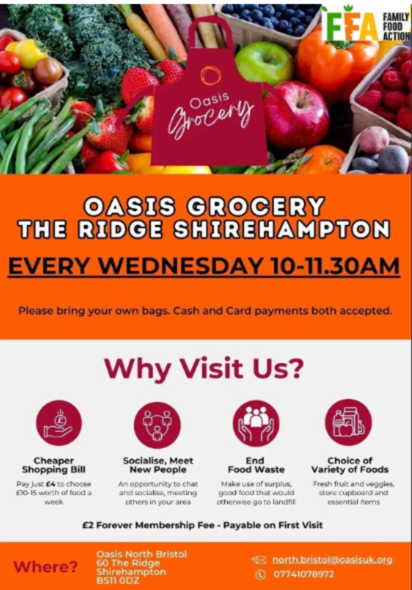
Shirehampton Food Pantry